Physicochemical properties of binding of the peptides to core were measured by Fluorescence Polarization Light analysis, and by Surface Plasmon Resonance characterization of binding to mature core. Drug-like small molecules, identified using the assays developed to characterize the core-derived peptide inhibitors, displayed half-maximal inhibition of core dimerization and HCV infectivity at 90 nM concentrations. However, evidence for direct binding to HCV core protein in cells has lacked so far. We show here that a biotinylated derivative of SL209, one of these small molecule inhibitors, directly binds to HCV core presumably at the site of viral assembly in infected cells. 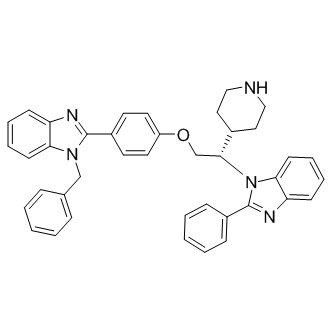 Ligandbased affinity isolation performed on lysates of HCV-infected cells or on recombinant HCV proteins demonstrated that the presence of core is required to retain other HCV proteins on the affinity-gel, thus confirming the central role of core in virion assembly. We describe here the first evidence of binding, to the HCV capsid protein, of a core dimerization inhibitor which reduces HCV production and infectivity. Direct binding was shown by using a biotinylated derivative of small molecule drug-like SL209, that largely maintained the HCV inhibitory properties of the untagged compound. Using SL209-biotin absorbed on agarose beads coated with streptavidin, direct physical interaction was demonstrated by affinity-isolation performed on lysates of HCVinfected cells, and confirmed with recombinant HCV proteins. Affinity-binding was shown not only for core, but also for other HCV proteins which were previously reported to be co-localized with core on lipid droplets or on ER, namely NS3, NS5A, and NS5B. In the absence of core, neither NS5A nor NS3 were retained on the SL209-biotin coated streptavidin beads. These results confirm that in the affinity-isolation conditions, SL209-biotin binding is strong enough to retain core complexes containing other HCV proteins. In support of this observation, colocalization of core and NS5A proteins with SL209-biotin was occasionally observed in HCV-infected cells using ICG-001 confocal microscopy. Despite similar structures, SL209-biotin may thus differ significantly from another inhibitor SL201, which had earlier been shown to not only disrupt core dimerization, but also inhibit interaction with NS3 helicase. Alternatively, assay conditions and their effect on avidity and affinity may play a major role in SCH772984 dictating complex formation: in cells, or on agarose beads. Protein-ligand complexes may be more stable than in the transferof-energy assays optimized to measure inhibition of proteinprotein interactions. Using SL209-biotin in combination with Streptavidin-Alexa 488, we showed by confocal immunofluorescence microscopy that the presence of core is indispensable to observe any intracellular staining: no labeling is observed in uninfected cells nor in cells infected with HCV replicon or with HIV. Furthermore, SL209biotin staining coincides mostly, but not always, with immunostaining of core. Cellular co-staining of core and SL209-biotin occurs often in sites where we could not detect lipid droplets, mainly on Endoplasmic Reticulum, as determined by staining with LAMP1, an ER marker protein. This observation is in line with the recent discovery that the core protein of high-titer JC1 recombinant HCV virus, used in our studies frequently exhibits an ER localization, rather than the predominant lipid droplet localization of the core protein of JFH1 virus described in previous co-localization studies in HCV-infected cells and core-transfected uninfected cells. Our choice of using JC1 in preference to JFH1 was dictated by a much improved level of viral production.
Author: screening library
Necdin interacts with the viral oncoproteins SV40LT and E1A and is functionally similar to pRb
Normal cells undergo a variety of genetic/epigenetic alterations which can be summarized in vitro by two major phenotypic changes: immortalization and transformation. Normal cells need to HhAntag691 clinical trial overcome cell cycle checkpoints and their limited division potential to achieve immortalization. Interlaced with this process, additional events contribute to cellular transformation and move cells toward the complete neoplastic phenotype. Human lung and colon cancers, genetically altered mice, mouse and human cell culture models, have all been extensively used to support the multistep progression model. Normal human epithelial or fibroblast cell transformation can be obtained with the sequential expression of a series of oncogenes, often including the viral proteins SV40LT or adenovirus early protein E1A. Some E1A domains conserved in SV40LT, including the CR1/CR2 Rb family binding domains and the p300/400-binding pocket are absolutely required for this transformation process. Despite the importance of these domains, the characterization of other viral oncogenic domains involved in transformation remains incomplete and additional activities could contribute to the carcinogenesis process. Polyomavirus, an oncogenic member of the papovaviruses, causes tumors in rodents and transforms primary cells in culture. In Py-Ibrutinib induced carcinogenesis, Large-T antigen is responsible for inappropriate cell cycle promotion and immortalization of mouse primary cells in culture. This ability is mediated principally through the binding and inactivation of pRb’s by the CR1/CR2 amino-terminal domains. PyLT genetically and functionally shares extensive homology  with the closely related SV40LT, although critical differences exist. As an example, while both proteins can bind p300 and inactivate the pRb family of tumor suppressors, only SV40LT can bind and inactivate p53. Functionally, SV40LT is a dual oncogene able to immortalize and transform primary rodent cells as a single event while PyLT appears limited to immortalization in vitro. Thus, differences between PyLT and SV40LT render these LT-Ags useful in studying different aspects of oncogenesis. Congruent with its in vitro activity, PyLT drives tumor formation when expressed under various promoters in transgenic mouse models, but the lower frequency and longer latency suggest a requirement for additional secondary events. While PyLT alone cannot transform cells in culture, it can confer resistance to growth arrest in low serum condition and protect cells against Fas and TNF-a induced apoptosis. This ability to evade apoptotic signals could potentially promote growth and allow cells to evade cellular-mediated immunity; important events in multistep carcinogenesis. Moreover, while PyLT does not bind p53 directly, it has the ability to overcome some effects of this master tumor suppressor, notably p53-induced cell cycle arrest. Finally, all E1A domains known to be essential to human cell transformation are not only conserved in SV40LT but are also found in PyLT. Based on this evidence, we hypothesized that, in addition to its immortalizing activity, PyLT also modulates important functions in early mouse cell transformation. Here, we present a strategy where PyLT induced immortalization-independent events can be revealed using NIH3T3 immortal mouse embryonic fibroblasts which already harbor immortalization-associated events that have occurred prior to PyLT introduction. Using gene expression microarray analysis, we identified Necdin among a set of genes that were consistently upregulated following PyLT expression in NIH3T3 cells. Necdin was first identified as a neuronal differentiation marker associated with growth arrest, but has since been found in several normal tissues.
Carcinogenesis is a multistep process defined by uncontrolled cell growth and neoplastic progression leading to invasive
The pattern of brain c-Fos induction after C75 treatment is also consistent with visceral illness. Systemic injection of 10 or 30 mg/kg C75 induces intensive c-Fos activation in the PVN and the nucleus tractus solitarius/area postrema 1-2 h after the injection. Similarly, ip injection of malaise-inducing doses of LiCl causes c-fos activation in the hypothalamic PVN and in the brainstem NTS. Systemic injection of C75 produces conditioned taste aversion further supporting the notion of visceral illness. In agreement with previous reports, there was no difference in the baseline energy expenditure or RER between ghrelin receptor KO and WT mice. Systemic bolus injection of C75 suppressed energy expenditure as reported earlier and also decreased RER. There was no difference in these R428 responses between the two genotypes indicating that ghrelin signaling is not required for the metabolic actions of C75. Suppressed energy expenditure and RER are consistent with the state of energy conservation and a shift to lipid catabolism, typical metabolic responses to fasting. It is likely that these responses to C75 are also secondary to suppressed feeding. The strong correlation between the time course of the anorectic effect and the suppression of energy expenditure further support this notion. In one study, but not in others, C75 treated animals lost more weight than the pair-fed controls leading to the speculation that C75 has an additional, direct energy expenditure-stimulating effect. The observation, however, that the treatment causes diarrhea leads to an alternative explanation for the increased weight loss after C75 administration. C75 is a potent inhibitor of FAS in vitro. It has been proposed that weight loss-inducing and food intake-suppressive effects of C75 are related to the suppression of FAS activity in the hypothalamus. According to this hypothesis, FAS inhibition-induced increases in malonyl-CoA in hypothalamic neurons PCI-32765 936563-96-1 provide a signal that leads to the activation of feeding-suppressive mechanisms. The efficiency of systemic C75 treatment to suppress brain FAS activity is, however, questionable. Systemic injection of 30 mg/kg C75 does not affect hypothalamic FAS enzyme activity, therefore it can be ruled out that the observed sleep, activity, body temperature and metabolic effects observed in our experiments are related to the inhibition of FAS activity in the brain. Furthermore, the plasma levels of C75 after administering 10 or 30 mg/kg ip reach less than 1% of the concentration needed for FAS inhibition in vitro. C75, however, has significant anorectic, motor activity-inhibiting and metabolic effect in this dose range suggesting that these actions are unrelated to the inhibition of brain FAS. The most parsimonious explanation for the observed actions is that they are due to the aversive actions of C75. As a result of visceral illness, feeding and motor activity are suppressed. Decreased eating and activity lead to suppressed energy expenditure with the concomitant decrease in body temperature and to the shift from carbohydrate to lipid utilization manifested as decreased RER. The disrupted sleep pattern  likely reflects the aversive effects. Since C75 has sparked interest for its potential use in body weight reduction and cancer therapy, its effects on sleep, activity and metabolism need to be considered also in this context. In conclusion, we demonstrated that systemic injection of C75 induces long-lasting decreases in sleep, motor activity, feeding, VO2 and RER. It is unlikely that these actions are due to the effects of C75 on brain FAS or the ghrelin system.
Compared to the regular velocity sedimentation method our approach lead to higher purity with less damage
In conclusion, during the reprogramming of spermiogenesis, there was a finely orchestrated dissociation of types of CAFs, which might contribute directly to the closure of transcription. This process could erase the paternal epigenetic pattern and generate a relative na? ��ve chromatin. A much similar erasure program was also observed in the late oogenesis. Taken together, this reprogramming during gametogenesis would be essential for the installation of the zygotic developmental program after fertilization. At this moment, the regulation of this erasure procedure was mostly unknown. In another aspect, histone modifications dynamically modulate chromatin structure, conducting the chromatin binding of functional molecules. We wonder if the disassociation of CAFs is causally related to the changes of epigenome in spermatids. Generally, acetylation of histones, especially acetylated histone H3 and H4, are considered as markers of “open” configuration of chromatin. During mouse spermiogenesis, the substantial expression of AcH4 was observed in step 1�C8 round spermatids, followed by a global hyperacetylation in Step 9�C12 elongating spermatids. A similar hyperacetylation wave of histones was also found in the rat elongating spermatids. This characteristic phenomenon has long been understood as a prelude of histone replacement carried by transition proteins and protamine, by which the paternal genome packaged into a highly compact structure. In mouse elongating spermatids, the spatial distribution of acetylated H4 within the nuclei was tightly associated with the chromatin condensation. It should be noticed that, the time point of CAFs dissociation and transcription termination was just before the beginning of histone hyperacetylation. So the “erasure” in spermiogenesis was not a direct consequence of histone replacement, but related to that histone acetylation. In that case, disturbing the acetylation level might injure the programmed spermiogenesis. This view has been preliminarily proved by histone deacetylase BAY-60-7550 purchase inhibitor TSA treatment. However, we believe the execution of histone acetylase inhibitors, underlying an induced hypoacetylation status, should be more harmful to the spermatids. In this study, we treated primary mouse spermatids with HAT inhibitor Curcumin in vitro, evaluated its effects on cell viability, transcription activity and CAFs dynamics. Our data revealed that, a  given dose of Curcumin could upregulate the spermatids apoptosis, as well as accelerated the erasure program happened to the CAFs and transcription, the mouse spermiogenesis was impaired by Curcumin treatment. Therefore, the BMS-907351 849217-68-1 potential reproductive toxicity of Curcumin, especially for its new preparations, should be carefully investigated. To explore the mechanism of male fertility, one of the biggest obstacles has been the lack of ideal models of the spermiogenesis, in vitro and in vivo. In this research, we applied a fluorescenceactivated cell sorting based on Hoechst33342 staining to purify the haploid spermatids. Most recently, haploid embryonic stem cell lines were established attributing to the similar ploidy sorting technique. Hoechst33342 is a living-cell permeant and relatively non-toxic. Verapamil has been used as an inhibitor of drug efflux pump proteins to block the efflux of Hoechst33342.
Increase the phosphorylation level of myosin together with an increased stress fiber formation
On human primary keratinocytes, when epidermal growth factor receptors were activated and the phosphorylation of extracellular signal related kinase was increased cell migration and wound healing was enhanced. Similarly, during b2 adrenergic receptor stimulation, when PP2A was activated and ERK was dephosphorylated, the extent of cell migration was decreased. On the other hand, inhibition of PP2A by 10 nM okadaic acid resulted in an increased extent of migration. The frequency of cyanobacterial blooms in many marine and freshwater environments has increased world wide during the last century, partly due to increasing temperatures as a consequence of global warming and partly due to the eutrophication of lakes. Blooms of cyanobacteria and their toxins may sometimes be associated with harmful effects on human health and livestock. When the temperature of the epilimnion reaches its maximum in late summer and early fall, the phytoplankton of many eutrophic lakes and ponds is often dominated by bloomforming cyanobacterial species of the genera Microcystis, Anabaena and/or Oscillatoria. During this time cyanobacteria are often an important food source for herbivorous zooplankton in freshwater ABT-199 ecosystems, such as for Daphnia, which often provides an important link for the transfer from primary production, e.g. from cyanobacteria to higher trophic levels. In cases when growth of Daphnia is mainly restricted by food quantity, non-toxic cyanobacteria can act as a complementary food source for Daphnia. However, since in eutrophic lakes growth of Daphnia is rather constrained by food quality than  by food quantity, bloom-forming cyanobacteria in those habitats have been claimed to be a major factor for a constrained mass and energy transfer from primary producers to organisms of higher trophic levels. Negative relationships between bloom-forming cyanobacteria and the abundance of Daphnia have been discussed extensively over the years, and three major quality constraints of cyanobacteria as a food source have been revealed so far: The occurrence of cyanobacterial filaments and the formation of colonies hinder ingestion by interfering with the filtering apparatus of Daphnia. Compared to most green algae, cyanobacteria contain low levels of essential lipids such as highly unsaturated fatty acids and sterols, which leads to reduced somatic and population growth of Daphnia due to constrained carbon assimilation. Many cyanobacteria produce a variety of bioactive secondary metabolites such as hepatotoxins like microcystins and/or protease inhibitors. These compounds reduce the fitness of Daphnia in terms of survival, growth and reproduction. In addition to microcystins, the role of protease inhibitors in herbivore/cyanobacteria interaction has recently also become a focus of attention. More than twenty depsipeptides, which specifically inhibit the serine Selumetinib MEK inhibitor proteases chymotrypsin and trypsins, have been found in different genera of marine and freshwater cyanobacteria. These two classes of proteases are the most important digestive enzymes in the gut of D. magna and are responsible for more than 80% of the proteolytic activity. It is known that the edible size fraction of natural phytoplankton can contain compounds that inhibit Daphnia��s trypsins and chymotrypsins. This inhibitory potential of seston can be in the same order of magnitude as of pure cyanobacterial cultures.