Although we cannot exclude the possibility that the expression of the transgene at the low level promoted bone formation at 4 months of age, this seemed to be unlikely because overexpression of BCL2 impaired osteoblast differentiation in a manner dependent on the expression levels of the transgene in vivo and in vitro, osteoblast density was Pimozide similar between BCL2 transgenic mice and wild-type mice at 4 months of age, and cortical bone in BCL2 transgenic mice was not further increased at 6 months of age irrespective of the similar level of transgene expression at 4 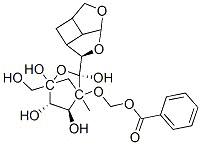 and 6 months of age. The disturbed osteocyte network was gradually restored after 4 months of age, probably because the level of the transgene expression was not sufficient to reduce the number of osteocyte processes. These seemed to be the reasons why the enhanced bone formation was observed only at 4 months of age. Thus, our findings suggest that the reductions in the numbers of osteocytes and their processes and the accumulation of TUNEL-positive lacunae were followed by the activation of osteoblast function, leading to an increase in bone formation. As the distribution of Sost protein was interrupted in osteocytes and b-catenin protein was increased in osteoblasts in BCL2 transgenic mice at 4 months of age, the activation of Wnt signaling in osteoblasts by the reduction of disseminated Sost protein seems to be one of the causes for the increase in bone formation in BCL2 transgenic mice at 4 months of age. In mice with osteocyte ablation by diphtheria toxin, the suppression of bone formation seemed to be due to maturational inhibition of osteoblasts, which was shown by the reduction in Diperodon osteocalcin expression, and maturational inhibition may have been caused by a necrosisinduced inflammatory reaction. The frequencies of TUNEL-positive lacunae in the trabecular bone of BCL2 transgenic mice were less than those in the cortical bone, probably because trabecular bone is more extensively remodeled than cortical bone and the dead osteocytes in the trabecular bone are rapidly replaced with live osteocytes. Irrespective of the relatively low frequency of TUNEL-positive lacunae, however, the increase of bone formation and unresponsive to unloading were observed in the trabecular bone at 4 months of age. Therefore, the reduction in the number of osteocyte processes in addition to the reduction in the number of osteocytes may be sufficient for the disturbance of osteocyte network in trabecular bone. The number of osteoclasts was reduced in the cortical bone but not in the trabecular bone of BCL2 transgenic mice at 4 months of age. It may indicate that osteoclastogenesis in cortical bone is more dependent on the osteocyte network than that in trabecular bone, because the number of osteoclasts was already reduced in the cortical bone in BCL2 transgenic mice at 5�C6 weeks of age, when the frequency of TUNEL-positive lacunae was about 20%, an equivalent value detected in the trabecular bone at 4 months of age. The augmented function of the osteocyte network by unloading may be required for the enhancement of osteoclastogenesis by the osteocyte network in trabecular bone. Our model also may explain why exercise increases bone mass, which has been indicated by many clinical studies, because osteocytes decrease the inhibitory effects on bone mass by reducing the inhibitory effect on osteoblast function and the stimulatory effect on osteoclastogenesis in the loaded condition compared with the unloaded condition.
Author: screening library
At concentrations anesthetics are effect result consistent with the computational predictions presented
In the presence of 40 mM Orbifloxacin halothane alone the optical density curve resembles the control, however the standard error indicates difference between the curves with a small increase in the optical density. While this seems to indicate that halothane does little to modulate tubulin assembly, previous evidence of altered tubulin structures and the inability of optical density to quantify such changes suggest that this may not be the case. Further investigation is clearly required. Anesthetic binding to tubulin may be important for the mechanism of anesthetic action, and also for anesthetic side effects related to post-operative cognitive dysfunction and/or exacerbation of neurodegenerative diseases. The size of the tubulin macromolecule, its numerous preexisting non-polar, hydrophobic cavities, and the generally weak binding of volatile anesthetics hinder the experimental investigation of this molecular mechanism of interaction. For this reason, it is an important problem to be able to predict LOUREIRIN-B computationally the binding of anesthetics to tubulin, and of small molecules to proteins in general, although this is a challenge since binding is often nonspecific, with multiple binding sites being filled. Thus, we have used a combination of computational methods including molecular dynamics simulations, surface geometry based anesthetic binding site prediction, focused and blind docking to identify putative volatile anesthetic binding sites on, and in, the tubulin protein. We hope that this work will enable future experiments to resolve the necessary ambiguity in our computational results. Multiple binding sites were found on the tubulin protein, but the availability of these sites for anesthetic binding was found to vary greatly. Since most binding energies were quite close in value, it is expected that those with lowest persistence will be filled only at large anesthetic concentrations. Since the binding energy of volatile anesthetics in protein hydrophobic pockets is generally small, the potential for anesthetic molecules to bind by inducing fits through changes in protein conformation is extremely low. It is more likely that these molecules bind in preexisting non-polar, hydrophobic cavities. In this case destabilization of a protein, or protein structure, may result either from preferential binding of the anesthetic to a less stable conformation of 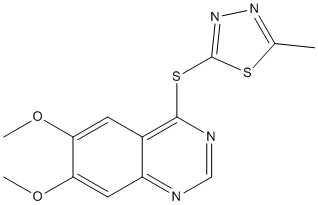 the cavity, or the disruption of allosteric changes at protein interfaces. We found that favorable thermodynamic conditions for the binding of anesthetics to tubulin result from van der Waals interactions. The nine sites predicted to persist for greater than 70% of the 5 ns simulation were located in the binding-pockets for colchicine, vinblastine, peloruside A, laulimalide, GTP, and GDP. These sites all reside in regions of either intradimer, or longitudinal interaction, indicating that at reasonable concentrations anesthetics do not alter lateral interactions. In fact, we do not predict strong binding in the taxol-binding site, which has been implicated in lateral interactions. This was also confirmed by experimental validation within the present investigation. Our findings suggest that modification of intradimer and longitudinal interactions may be the general mode of MT destabilization by volatile anesthetics. This is consistent with observations that anesthetics are weak destabilizers of MTs under normal conditions. Steric hindrance caused by the antimitotics vinblastine and colchicine result in tubulin being constrained to a curved conformation preventing MT polymerization, and promoting the formation of macrotubules.
The polar head groups was also shown to be a determinant in their toxicity towards the cells examined
The toxic effects of surfactants were also tested in confluent HeLa cell cultures as described for polarized epithelial cells. This cell line was chosen since it is a human cervical cell line. Despite the fact that these cells have epithelial origin, they are usually Dexrazoxane hydrochloride referred to as epithelial-like cells because they do not completely polarize and do not establish tight junctions between them. Despite the fact that clinical trials using surfactant-based gels have failed, it has been shown that several quaternary ammonium compounds, with various alkyl chain lengths and polar head groups, exert antibacterial activity against both Gram positive and Gram negative bacteria, as well as against some pathogenic species of fungi and protozoa, at concentration that are not harmful to mammalian epithelial cells. The study of the relation between cationic surfactant structure and its toxic effects is crucial to understand the mechanisms involved in surfactant toxicity and make predictions of the impact that new surfactants will have in cell viability. For this reason we tested the effects of the hydrocarbon chain length and polar head group structure of the cationic surfactants upon cell viability. Surfactant toxicity is dependent upon the ability to partition 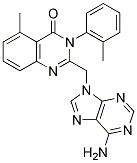 between the aqueous phase and the cell membrane and may also depend upon their ability to subsequently cross the membrane and enter the cytoplasm. The fact that amphiphile partition coefficients as well as the rate constants for their insertion into membranes and translocation across them are lower for more ordered membranes explains why HeLa cells, that are neither polarized nor have well-formed tight junctions to make their less ordered membrane domains less accessible, may be more susceptible to surfactant toxicity than fully polarized and confluent epithelial cells such as MDCK and Caco-2 cell lines. The first criterion to be considered in the evaluation of the safety of topical vaginal Orbifloxacin microbicides is their toxicity to the cervicovaginal mucosa. On ethical grounds any such evaluation should begin with an in vitro screening before using animal models and human studies. In this work we have screened the in vitro effects of concentration, exposure-time and surfactant structure on the viability of mammalian cells with characteristics mimicking the different cell types that exist in the human cervicovaginal mucosa. Earlier studies identified vaginal columnar epithelial cells as the most important site of damage caused by the surfactants Nonoxynol-9 and C31G in humans. Our studies were thus performed on two laboratory models of mammalian columnar epithelial cells, namely, fully polarized MDCK and Caco-2 cells grown to confluence. These cell cultures have wellformed tight junctions and are commonly used as models of ”tight epithelia” in laboratory trans-epithelial drug transport studies. Non-polarized cells, in particular dendritic cells, have previously been identified as the primary sites of viral infection in the vagina. We, therefore, also studied surfactant toxicity to dendritic cells under non-confluent conditions. As a model for confluent but non-polarized cells, vaginal ”epithelial-like” HeLa cells were also included in this study. A comparison of these two cell types is in itself instructive since the exposed cell surfaces are expected to be significantly different in membrane order and, therefore, with regard to surfactant partition into and translocation across them. The results reported here indicate that all surfactants used in this study revealed concentration and time-dependent toxic effects but exhibited different degrees of toxicity depending on the chemical nature of their polar head, which is in agreement with previous in vitro and in vivo studies. For Triton X-100, DDPS and SDS, cytotoxicity was not observed up to concentrations close to the Critical Micelle Concentration, in both non-polarized and polarized epithelial cell lines, whereas the toxicity of cationic surfactants occurred at concentrations very much lower than the surfactant CMC.
Similar to the frequency of intact Golgi in the presence of GFP alone
This represents a novel approach to antagonize ER/Golgi trafficking, as no other cellular or microbial protein has been described to use a motif similar to an ER export signal to gain access to and antagonize the secretory pathway. This Benzoylaconine vector encodes the gene of interest under a CMV promoter and SEAP, a reporter protein that is rapidly secreted from cells and is a quantitative surrogate of protein secretion, which is translated via an internal ribosomal sequence. All proteins expressed using this vector system had N terminal GFP tags, which has been reported to not affect the ability of PV 3A to inhibit protein secretion. At various times post-transfection, media and cell pellets were assayed for extra and intra-cellular enzymatic SEAP activity, respectively; total SEAP levels did not significantly differ between all proteins expressed at any time point tested. For all constructs, enzymatic SEAP activity was first detectable over background in both fractions at 6 hpt. Expression of GFP alone led to,75% secreted SEAP throughout the assay, whereas expression of PV 3A led to a significant reduction of SEAP secretion with maximal reduction to 38%, or 53% of GFP alone levels, at the final time point, which is similar to previous results. With similar kinetics to 3A, NV p22 also ultimately inhibited SEAP secretion to 34%, or 48% of GFP alone levels. From this, we concluded that, despite their differing specific effects on Golgi phenotype, NV p22 is able to inhibit SEAP secretion, and therefore cellular protein secretion, to levels similar to PV 3A. To gain a better understanding of potential ultrastructural alterations induced by p22, cells expressing GFP or GFP-p22 were flow sorted for GFP expression at 24 hpt. After 24 hours of recovery following flow sorting, and therefore 48 hpt, cells were fixed and thin sections were visualized by electron microscopy. After flow sorting, cells expressing GFP alone had intact and peri-nuclearly localized Golgi with cisternal stacks clearly visible in 31 of 59 cells examined. In contrast, cells expressing GFP-p22 had detectable Golgi stacks in just 4 of 57 cells examined. Instead, GFP-p22 cells exhibited an Lomitapide Mesylate abundance of large vacuoles, loose single membranes, and double-membrane structures. Many of these structures had what appeared to be cargo inside them, but the nature of this cargo was unclear as these structures were much larger than would be expected for those containing normal secretory pathway cargo. These results confirmed the immunofluorescence observations of a disassembled and phenotypically abnormal Golgi, demonstrating that expression of p22 led to rearrangements and alterations to various components of the secretory pathway, as would be expected during antagonism of this pathway. To explore if this conserved norovirus motif could play a role in the previously demonstrated inhibition of cellular protein secretion by p22, individual alanine mutations were made within each of the conserved residues within the putative ER export signal of p22 and tested as before using the SEAP system. Mutations within the S, D and G residues had no effect on the ability of p22 to inhibit cellular protein secretion; however, mutation of both the Y and E residues led to intermediate levels of protein secretion. When these two residues were combined into a single AXWASDG construct, SEAP secretion at 36 hpt was not statistically different from that of GFP alone. Total SEAP expressed by all p22 mutants did not significantly differ from that of wildtype p22 and similar levels of all p22 proteins were expressed, as confirmed by western blot analysis of intracellular fractions at 36 hpt, showing that the 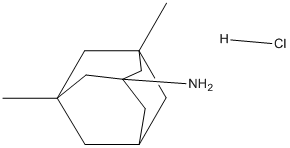 observed decreases in inhibition of protein secretion were not due to changes in protein expression or stability. To examine Golgi phenotype in cells expressing the AXWASDG mutant of p22, we next explored the phenotype of the Golgi in cells expressing this construct. By electron microscopy at 48 hpt and after flow sorting, cells expressing p22 had wildtype Golgi with intact cisternae present in 26 of 56 cells.
In a FCT-3 M53 isolate Nra acted as an activator of pilus expression without affecting F2 expression
Interestingly, it was recently reported that in MRSA S. aureus strains, biofilm development is promoted under mildly acidic growth conditions triggered by the addition of glucose to the growth medium. In this instance, it is tempting to speculate that local pH lowering resulting from sugar consumption on the cell surface may drive the Chlorhexidine hydrochloride formation of firmly adhering biofilm-like microbial communities. Third, many Gram positive pathogens modulate gene expression in response to pH changes. For instance, S. mutans survives and proliferates at low pH by up-regulating a number of genes that protect against acid stress. Moreover, microarray analysis revealed a differential expression of approximately 10 to 15% of the total number of genes in Staphylococcus aureus, S. pyogenes and S. agalactiae under mildly acidic conditions compared to neutral pH. Of note, no differences in pilus expression were detected in the S. pyogenes microarray, probably because the growth conditions investigated in that study did not lead to attain pH values under 5.4, as in our experiments. Interestingly, gene expression regulation at low versus neutral pH has been show to correlate with differential expression during exponential-phase planktonic cultures versus mature biofilm in S. aureus and, in the case of S. pyogenes, with differential gene expression during murine subcutaneous infection versus in vitro growth at neutral pH. The finding that biofilm formation was pH-dependent in some but not all GAS FCT-types, led us to further investigate whether this phenotype variation was associated with a difference in the expression of FCT-encoded genes. Indeed, Western Blot  and RTPCR experiments revealed higher amounts of pilus proteins and fibronectin-binding adhesins in FCT-2, FCT-3 and FCT-4 M12 isolates when bacteria were grown at a starting pH of 6.4 as compared to growth at pH 7.5. In contrast, pH-independent pilus expression was observed in the case of an FCT-1 strain. Concerning pilus expression in non biofilm former strains, we observed pH-dependent expression in FCT-4 M28 as well as in M89 strains. The data suggest that M28 strains may lack a still undefined factor required, in addition to the pili, for biofilm formation. The same could be true for M89 strains, although in this case the incapacity to form biofilm could also be associated to low pilus expression. Therefore, pili appear to be necessary but not sufficient for GAS biofilm formation, confirming previous literature data indicating that this mode of growth relies on multiple bacterial components. Finally, constitutive expression of GAS pili in a FCT-3 recombinant strain resulted in pH-independent biofilm formation, in contrast to the results obtained with a recombinant strain constitutively expressing the F2 protein. This confirmed GAS pili and not F2 proteins to be directly involved in pH-dependent autoaggregation and biofilm formation on biotic and abiotic surfaces. Besides genes encoding fibronectin-binding adhesins and the pilus machinery, all FCT genomic regions contain genes coding for stand alone transcription regulators. These regulators, the RofA/Nra homologues and MsmR, coordinately control the expression of the FCT open reading frames and of important virulence factors outside this region, during different bacterial growth phases. Further on, they are involved in the response to changes of environmental parameters like oxygen pressure and temperature. Our results indicate that the expression of the FCT transcription regulators is affected by pH. In fact, in the analyzed FCT-3 M3 strain, msmR transcript amounts increased at lower pH, in parallel to the enhanced expression of pili and the F2 protein. MsmR and Nra participate in the fine tuning of FCT-3 pilus expression by exerting their function in Benzethonium Chloride opposite directions and have been shown to act either as positive or negative regulators, depending on the strain genetic background. In particular, in a FCT-3 M49 strain, expression of pili and the F2 protein were shown to be repressed by Nra and activated by MsmR.